


Advocacy
The Mayday Movement
A MAYDAY is a call for help. Sometimes the call comes not from outside, but inside the team.
Join The Mayday Movement by signing the pledges below, co-advocating, or co-creating solutions for healthier, safer emergency response organizations from within. Because...
We do dangerous work. We should not face danger in the office, too.
Why it exists
Responders accept danger in the field. They should not have to accept danger in the office. Bullying, harassment, retaliation, exclusion, and fear-based management cause lasting workplace trauma — and they degrade the very operational performance the mission depends on. The Mayday Movement treats these psychosocial hazards as safety problems, not personality problems.
Bullying, harassment, weaponized policy, exclusion, unfair termination, false narratives, punitive culture, and fear-based management cause lasting personal and workplace trauma. They not only degrade the very operational performance the mission depends on, but they contradict the spirit, the purpose of SAR: helping people. It is hypocritical to help others in the field while harming team members in the office.
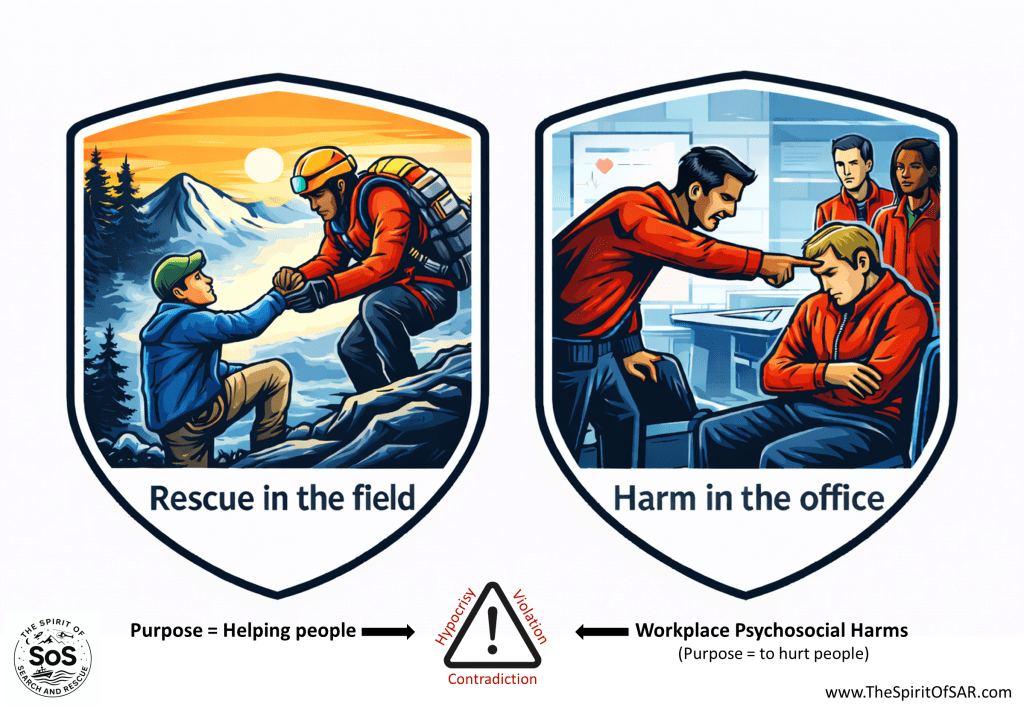
The Mayday Movement is an advocacy initiative, educational campaign, and a set of pledges and petitions toward improving workplace psychological and psychosocial safety in emergency response workplaces, and equal rights for volunteer first-responders.
First-responders accept danger in the field — they should not accept danger in the office.
Too often people are psychologically and socially harmed by poor ego management, gaps in ethical and psychological awareness/training, gaps in regulatory frameworks, and fear-based reactions. The Mayday Movement treats these psychosocial hazards as safety problems, not personality problems — some are considered attacks, but all are considered operational and mission-critical risk controls.
Public safety industries are about high-risk safety-critical work. Allowing psychosocial risks to remain is not just damaging to public-safety and public trust, but hypocritical to the safety-centric nature of emergency response. The public has a right to demand and expect public-safety workplaces are fear-free — free of psychosocial harms.
Psychosocial Safety
Treat bullying, harassment, and chronic fear as workplace hazards — identified, reported, and controlled like any other risk.
Workplace Trauma Care
Recognize that harm from colleagues and management can outlast harm from the mission, and support those living with it.
Advocacy & Voice
Speak up for volunteer rights, fair governance, and honest reporting — without retaliation for those who raise concerns.
Ethical Leadership
People-first but mission-focused: leadership measured by how the team is treated, not only by outcomes.
The Pledge
By signing, you commit — in whatever role you hold — to the following:
◆I will not participate in, excuse, or stay silent about bullying, harassment, or humiliation in my team.
There's a longer version
The commitments above are the short pledge. There is also a full-length working pledge with many further items — covering personal conduct, psychosocial risk controls, reporting and non-retaliation, workplace trauma and recovery, leadership and governance, volunteer and worker rights, and learning culture. It is a living document intended for teams and organizations to adopt and adapt.
The Mayday Movement is the advocacy arm of our Psychology & Human Factors work. The evidence behind it is collected in our SAR Human Factors Library. To invite SoS to speak, review team health, or run fear-aware coaching, use the contact page.
Questions about the pledge itself? Write to the Mayday Movement directly: mayday.movement@thespiritofsar.com
Sign the pledge
We use your details only to contact you about the Mayday Movement. S5: Safe Skies, Seas, Surfaces, & Spaces, SAR mates!
Signatories
Everyone below has signed the pledge. Email addresses and messages are never published.
Loading signatories…
Petition
Equal Rights for Volunteers in First Response
Volunteers carry the same operational risk, wear the same uniform, and face the same workplace cultures as paid staff — but in many countries the regulatory framework does not treat them as workers. Protections against psychosocial harm, avenues for complaint, and legal recourse often stop at employee status. This petition calls on governments, regulators, and first-response organizations to close that gap.
What we are asking for
◆Volunteers in first-response should have the same legal protection from psychosocial hazards as paid employees.