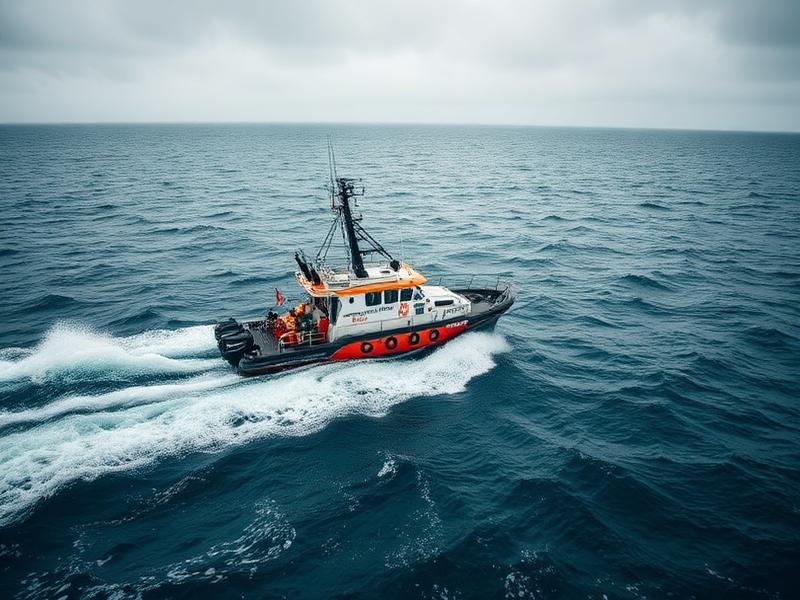
Maritime SAR covers response to people in distress at sea and on inland waters: vessels in difficulty, persons in the water, capsizes, groundings, medical evacuations, missing swimmers and overdue craft. It is coordinated internationally, but delivered locally — often by small crews in small boats, in poor conditions, at short notice.
How it is organised
- Search and rescue regions (SRRs). The world's oceans are divided into regions, each with a state responsible for coordinating response within it.
- Rescue coordination centres (MRCC/JRCC). The centre receives the alert, evaluates it, plans the response, tasks assets and coordinates the case from start to finish.
- On-scene coordinator (OSC). When several units respond, one is designated to coordinate activity at the scene and report back to the coordinating centre.
- Rescue units. Rescue boats and lifeboats, helicopters and fixed-wing aircraft, merchant vessels diverting to assist, jetskis and shore-based teams.
How distress reaches a rescuer
Alerting may come by VHF radio and DSC, by satellite through EPIRBs, PLBs and the international distress alerting system, by mobile phone, by another vessel, or by a member of the public ashore. Speed and accuracy of the initial alert shape everything that follows.
Search planning at sea
Because the sea moves, so does the subject. Planners estimate drift from current, wind and leeway, establish a datum and search area, and choose patterns such as expanding square, sector, parallel track or creeping line — balancing probability of containment, probability of detection, and the endurance of the units available.
The people factor
Small-boat maritime SAR is unforgiving of poor communication and unhealthy team dynamics. Fatigue, cold, noise, motion and time pressure all degrade decision-making. Crews that can speak up without fear catch mistakes earlier — which is why SoS treats team health and psychosocial safety as operational capability, not extras.
Go further
- Water Safety Library — curated free guidance, manuals and standards.
- Training — small-boat handling, rescue scenarios and OSC education.
- What is Search and Rescue? — the wider picture.
Train your crew on the water
You provide the boat and the venue; SoS provides the insight, the learning and the experience.
Enquire about training