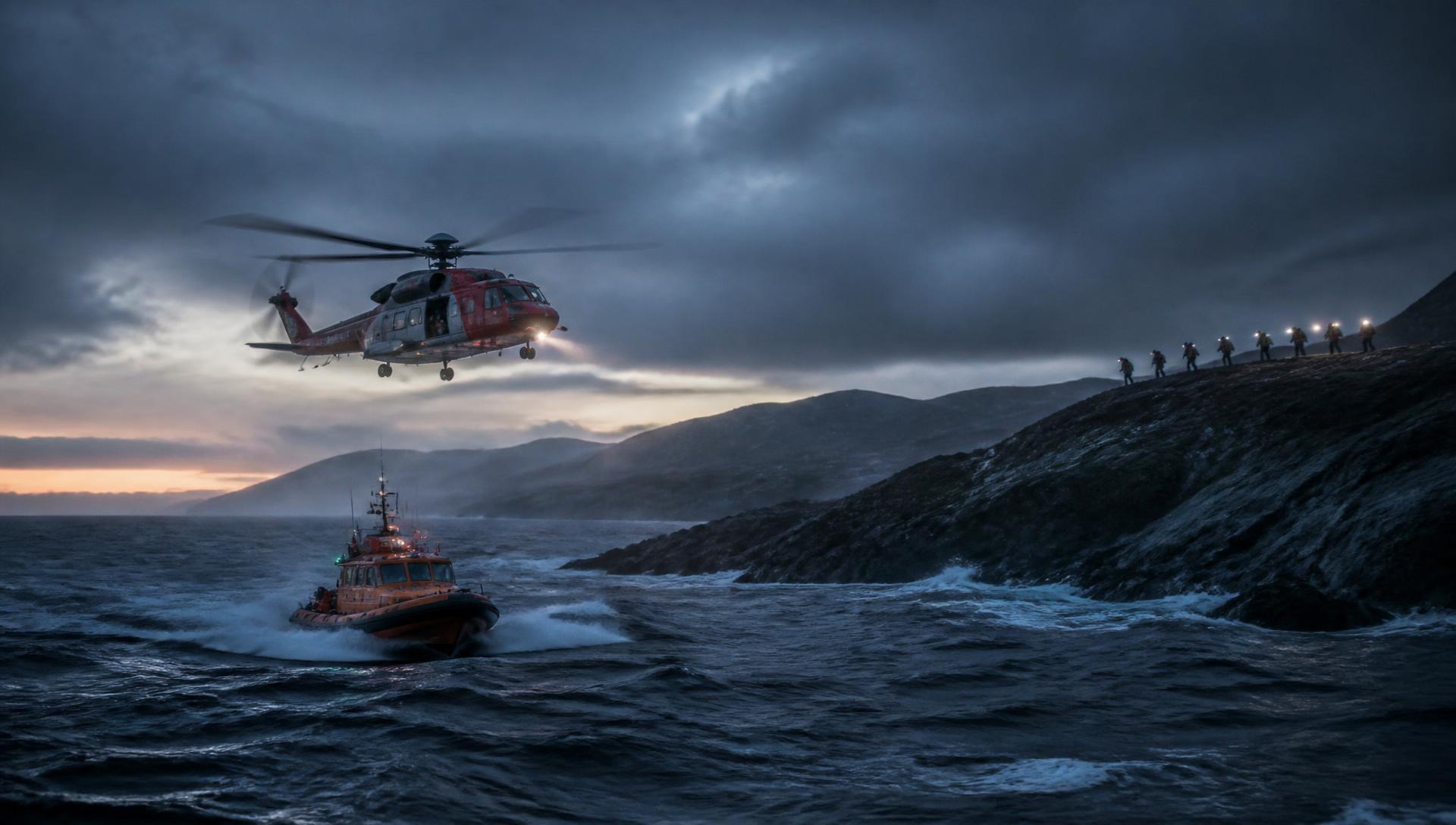
Search and rescue (SAR) [1] is effort to locate and assist people believed to be in distress or imminent danger. It often involves recovery, the retrieval of deceased persons or human remains. SAR thereby becomes SARR.
SARR can be performed in all environments: aquatic (water), aeronautical (air), land (ground), and astronautical (outer space). It can be performed in a systematic [2], coordinated manner involving many typically-organizational participants or, depending on the complexity, it can be performed by individuals or groups of individuals without coordinated organizational support. In any case, the life-saving goal of SAR calls for any and all support to achieve. [8]
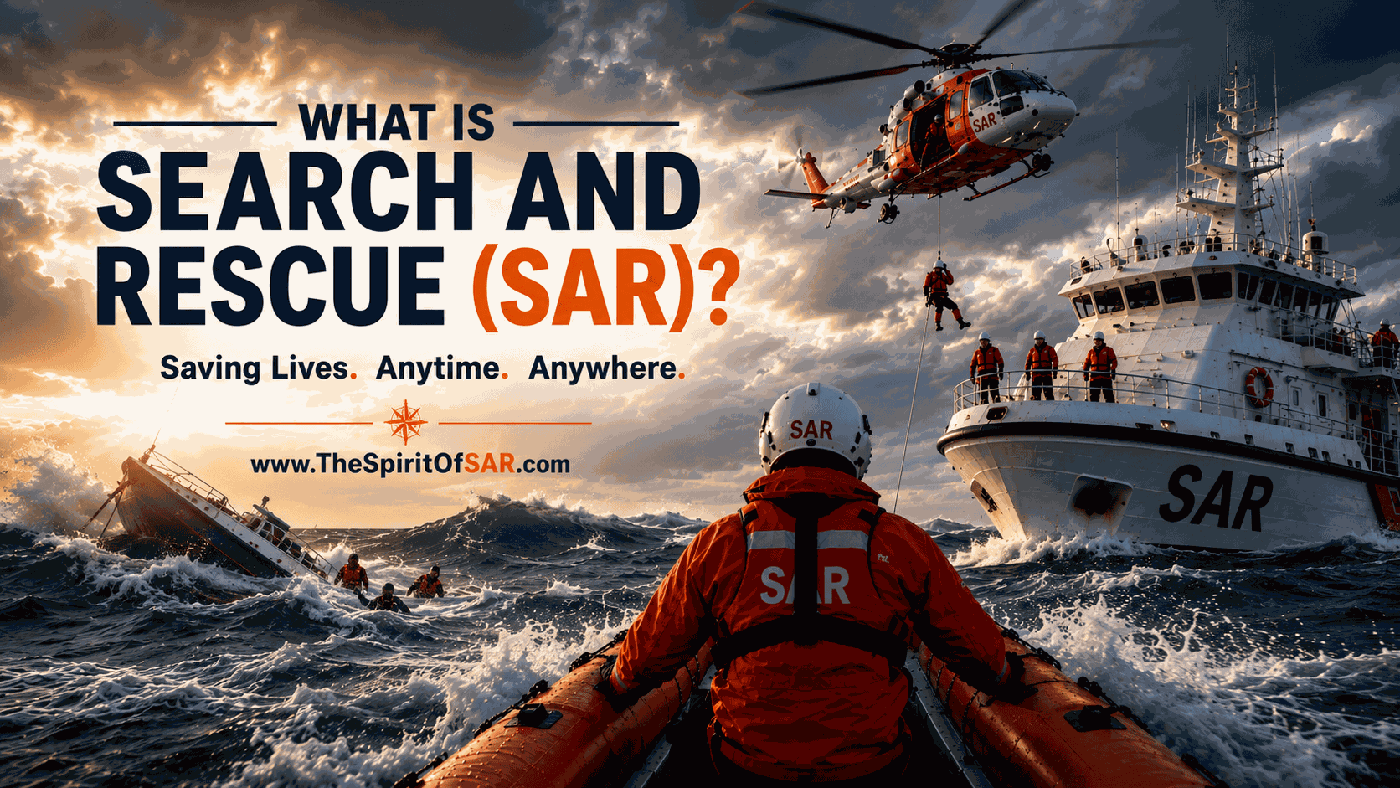
SAR can be performed by individual persons, groups, teams, or organizations, some of whom may be paid while others unpaid. (SAR can be performed by paid and/or unpaid professionals.)
The term is typically associated with systematically performed SAR operations by trained teams, but SAR is often performed by individuals or groups of individuals in an impromptu manner. We can, thereby, better distinguish SAR: Systematic SAR and Impromptu/Non-Systematic SAR.
SAR response that is systematic, organized and coordinated is often conducted by trained unpaid teams (volunteers) and/or trained paid personnel. The latter are often employees of government agencies or civil organizations tasked with performing first-response and related activities. Civil organizations may include commercial operators (such as marine assistance towing, or civilian coast guards).
Government agencies, such as military, border security, police, fire departments, and civilian coast guards are typically and officially responsible for systematic SAR. Governmental organizations are ultimately responsible because of historical, legal, and technical reasons. Some nations are more/less open to civilians engaging in SAR activities. A large share of the world's SAR capability is delivered by volunteers (unpaid workers) — one reason SoS advocates for equal right for volunteers.
- For a Presentation comparing maritime SAR organizations, or for consulting to learn more, Contact SoS (contact@thespiritofsar.com)
Internationally, agreements and conventions [2] have been created to systematize and better support coordinated, structured response for global SAR coverage. Many participating nations and organizations [7] have developed local SAR policies and plans supplementing, applying, or adhering to international guidance [4]. Systematic or coordinated SAR within a nation, and across borders, is expressed by the concept of a SAR system.
Coordinated SAR is not a single activity or siloed system—it is a system of systems, involving people, communication networks, decision-making structures, regulatory frameworks, vehicles and other operational resources.
SAR outcomes depend as much on people, training, communication and organisational culture as they do on watercraft, aircraft, ground vehicles and radios. That is why SAR is best understood more precisely as a socio-technical system of systems: the social and the technical must be designed and improved together.
Features of SAR
Some characteristics of SAR, especially systematic SAR, include:
- Safety-critical work
- Public-safety purpose
- High-risk work environments
- life-and-death environments creating greater risk for physical and psychological trauma
- Multi-tasking
- Training-intensive
- Often physically demanding
Types of Search and Rescue
SAR operations generally fall into three primary categories:
Aquatic, Water or Maritime SAR [3] is SAR on or under bodies of water. It's often performed by paid coast guards, maritime authorities, or unpaid responders. It includes response to notification of vessels in distress, persons overboard, airplane crashes, and missing boats.
Some organizations conducting SAR may also engage in vessel assistance towing (such as responding to engine trouble). Depending on nation and its legal frameworks, distress response and boat salvage may be considered activities to be performed by distinct types of organization. Some countries, for example, may discourage if not prohibit government agencies from engaging in vessel salvage.

Land SAR performs disaster response and missing person searches on land and within the ground, including wilderness and cave rescue. It may use specially trained canine (dogs) responders [6], and may involve urban environments.
Aeronautical SAR responds to aircraft emergencies, crashes, and missing flights. It involves the use of aircraft to conduct SAR operations, often but not always in maritime environments. Aircraft such as helicopters, and fixed-wing craft are frequently used for land and maritime domains.
Each SAR category shares common principles but differs in environment, risk, regulation, and coordination complexity. The overlap of physical environments means there will likely be the need for coordination of operational assets specialized to each environment.
Innovation Point — Another type of SAR …
Another type of SAR is what SoS Founder calls Astronautical SAR [5] (or Astro SAR): SAR in outer space. This includes safeguarding astronauts after re-entry to Earth from orbit, on-orbit rescue operations, as well as future spaceflight SAR activities.
Read relevant articles on this innovative and interesting topic. Contact to co-create, or contract hire for developing works.
How SAR Operations Work
A typical systematic SAR mission ideally follows a structured iterative process that can be updated and corrected as new information is acquired. For example, internationally the IMO / ICAO IAMSAR manual [4] provides guidance and standards for a phased approach. Nationally, each country may have local manuals, policies and procedures expanding upon or adhering to global guidance [9].
A general SAR process, consistent with those practices, can be summarized in the following manner.
- Incident Detection (distress signal, report, or alert)
- The incident may be actual (true) or suspected
- This is about information acquisition (awareness)
- Assessment and Verification
- Examining the information, its sources, contexts, etc.
- This is about collecting more information and reasoning about it
- Tasking and Coordination of Resources
- Assigning, Allocating, Delegating people and vehicles
- This is about deploying first-response personnel and vehicles, and their inter-coordination over time
- Search
- Searching for missing or distressed persons or vehicles (aircraft, watercraft, land vehicle, etc.)
- This is about using personnel and vehicles to actively search in a structured manner, typically employing search patterns and supporting technologies
- Rescue and Recovery
- Performing activities that either save life or recover human bodies and remains
- This is about safeguarding people and dignity
Throughout these distinctions, new information should be used to update the process and actions taken. In summary—the SAR process moves from awareness, information collection, and evaluation to action to further information collection, re-evaluation, etc. In systematic SAR, whether by a single SAR authority (typically a governmental org.) or involving inter-organizational cooperation, this process is more specific and detailed [4][9].
Although SAR activity can and does occur informally by Good Samaritans or assisting vessels, an official coordinated SAR mission is typically managed through Rescue Coordination Centers (RCC), MRCCs (Maritime Rescue Coordination Centers), Joint Rescue Coordination Centers (JRCC), local first-responders and their vehicles (formally called, 'Search and Rescue Units' or SRU in [4]).
The nature of SAR introduces elements that either call for, or make it fall within, the purview of governmental jurisdiction, including the availability and provision of resources and technical training of first-responders. However, those same elements mean SAR can be performed by anyone that can save life, whether in an impromptu or coordinated manner.
Coordination in SAR
Systematic SAR operations rely heavily on cooperation and coordination between:
- Government agencies (military, police, border, defense, fire departments, …)
- Volunteer responders (unpaid workers)
- Private vessels (commercial, industry, recreation, …)
- Communication systems (Radio, Satellite, Internal networks, …)
Effective cooperation and coordination ensures rapid response, optimal resource use, and safety of responders.
Coordination from offices, as well as on-scene personnel (people in the field during response activities), involves: multi-tasking, continuous situational awareness, risk-assessment, dynamic evaluation, decision-making, constructively responding to uncertainty, constructively handling lack of information, and balancing available resources. It is influenced by environmental, cognitive, workplace, psychosocial, and other factors across SAR authorities, SAR Mission Coordinators, On-scene Coordinators [4], other first-responders, and support personnel.
Why SAR Systems Matter
SAR matters because its purpose, its foundation, its spirit is helping others. Both impromptu and systematic SAR fulfills individual moral intuitions and (inter)national legal obligations.
SAR systems (systematic SAR) matter because they provide a formal set of procedures, resources, and cooperative means to help manage, navigate and structure emergencies. They help mitigate risk in what often are challenging and chaotic situations.
The effectiveness of SAR is not determined solely by equipment (such as aircraft or watercraft)—it depends on:
- Capacity and will to respond safely
- Communication quality: clarity, consistency, flexibility, reliability, …
- Inter-organizational Cooperation
- Interoperability
- Resource availability (scarcity or abundance)
- Training
- Decision-making quality
- Leadership structure and quality
- Human performance, Team health
- Ethical-grounding and moral courage
- Political and other pressures
Failures or toxic interference in these areas often lead to poor outcomes and avoidable conflict.
- At The Spirit of SAR (SoS), we work toward understanding and raising awareness of counterproductive factors, co-developing solutions, and focusing on what it takes to improve SAR from within. We want to know what it takes within the team, the individual mind, the organization, and the government. We want to know what support, training, education, equipment, standards, resources, innovation, and regulatory reforms are needed to maximize human-potential (placing people-first) and continuously improve operational excellence toward achieving mission success.
Contact SoS for collaboration, consulting, and coaching.
Conclusion
SAR is both a human action, and a sociotechnical system. Systematic and coordinated search and rescue is a complex, high-risk domain requiring proper training, ethical leadership, healthy teamwork, discipline, and systems thinking. Understanding how SAR activities and systems work is essential for improving outcomes and saving lives.
- SoS employs a people-first but mission-focused ethically-grounded approach where mutual self-growth (a form of continuous improvement) is a non-negotiable for individuals, teams, and organizations alike.
S5: Safe Skies, Seas, Surfaces, and Space(s), SAR mates. – Founder, SoS
© 2026, Robert J. Rovetto. All rights reserved.
References
- [1] Search and Rescue, Wikipedia.
- [2] SAR Convention, IMO. We read: “The 1979 Convention, adopted at a Conference in Hamburg, was aimed at developing an international SAR plan, so that, no matter where an accident occurs, the rescue of persons in distress at sea will be coordinated by a SAR organization and, when necessary, by cooperation between neighbouring SAR organizations.”
- [3] Maritime Search and Rescue, The Spirit of SAR (SoS).
- [4] IAMSAR Manual, IMO, ICAO.
- [5] Resurrecting Space Guard: Concepts for a Coast Guard of Space, R.J. Rovetto.
- [6] Search and rescue dog, Wikipedia.
- [7] SAR Contacts, https://sarcontacts.info/
- [8] Auxiliary Specialty Course SEARCH AND RESCUE (AUXSAR) Student Study Guide, COMDTPUB P16794.35B
- [9] National SAR manuals, policies and procedures (varies by country).
Bring this into your team
SoS delivers training, coaching and organisational reviews that connect technical skill with team health and ethical leadership.
Get in touch