Almost nobody starts in search and rescue by being hired into it. Most people begin as volunteers, prove themselves over a season or two, accumulate certifications, and only then compete for the small number of paid roles that exist. This guide sets out that path honestly: the entry points, the training, the standards, the costs, and the realistic route from volunteer to professional.
SoS exists to support past, present and aspiring first responders. If you are at the very beginning, start with What is Search and Rescue? for the foundations, then come back here.
Step 1 — Pick a domain
"Search and rescue" is not one job. The training, the risk profile and the hiring market differ sharply between domains, so choose deliberately rather than applying everywhere.
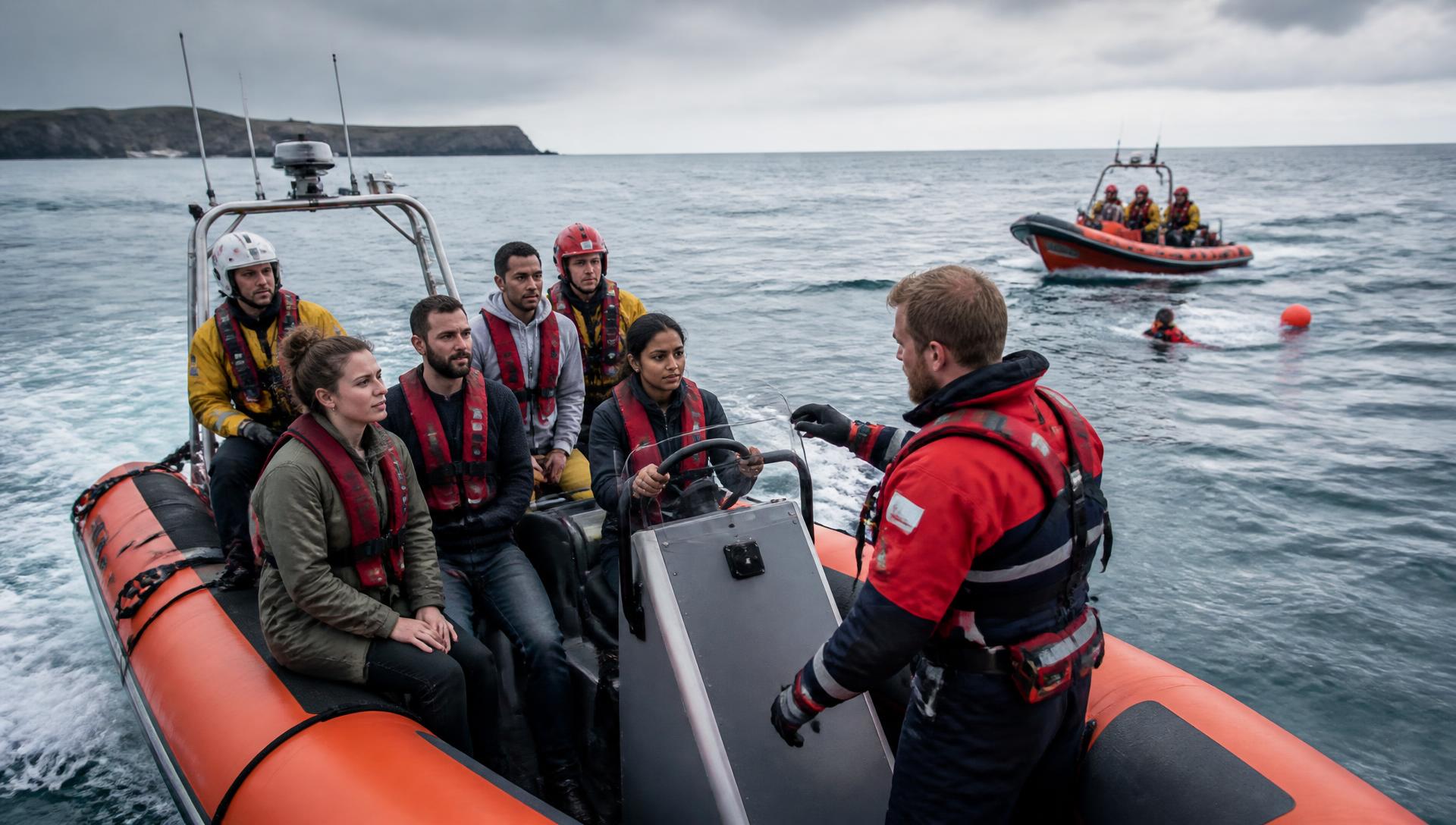
- Maritime and inland water SAR. Lifeboat and rescue-boat crew, swiftwater and flood rescue, surf lifesaving, coastal rescue teams. Heavy on seamanship, boat handling, navigation and cold-water skills. See Maritime Search and Rescue.
- Land and wilderness SAR. Ground search teams, mountain rescue, cave rescue, tracking, technical rope. Heavy on navigation, endurance, wilderness medicine and rope work.
- Air SAR. Helicopter rescue crew, winch operators, spotters, fixed-wing search observers. Usually reached from an existing aviation, military or paramedic career.
- Urban and disaster response. Urban search and rescue (USAR), collapsed structure, flood response — typically attached to fire services or national frameworks.
- Support roles. Communications, logistics, planning, search management, K9 handling, drone/UAS operations, welfare and peer support. These are real SAR roles, they are chronically short-staffed, and they are often the fastest way in.
Step 2 — Find your entry point
Entry is local. Find the organisations that actually operate where you live and ask them what they recruit for and when.
- Volunteer SAR teams and lifeboat stations. The single most common way in. Most run open evenings or intake cycles once or twice a year.
- Auxiliaries and reserves attached to a coast guard, civil protection agency or emergency service.
- Statutory services. Coast guard, fire and rescue, police, ambulance and military roles that include SAR tasking. These are competitive, salaried, and usually require a formal recruitment process rather than a walk-in.
- Adjacent professions. Commercial mariner, paramedic, nurse, pilot, dispatcher or ski patroller — each provides a credible sideways route into SAR work.
Ask any team three blunt questions before you commit: how many training hours per month do you expect, what do I have to pay for myself, and what does your probation period look like?
Step 3 — Training and certification
Requirements vary by country and organisation, but the pattern is remarkably consistent worldwide. Peer bodies such as NASAR in the United States and national maritime rescue organisations elsewhere publish course structures you can check against; your own team's standard is the one that counts.
- Foundation awareness. Introduction to the SAR system, incident command structures, radio procedure, scene safety and your legal duties as a responder.
- Core operational course. Typically a searcher/crew qualification covering navigation, search techniques, subject behaviour, evidence preservation and survival skills.
- Medical. First aid at minimum; wilderness first aid, emergency medical responder or EMT-level qualifications open far more doors.
- Domain-specific technical skills. Powerboat handling and navigation, swiftwater technician, rope rescue, avalanche, helicopter operations, confined space.
- Search management. Planning, probability of detection, resource tasking and incident command — the path toward leading operations rather than only crewing them.
- Currency. Certification is not the finish line. Most standards require recurring drills, annual revalidation and a minimum number of exercise hours to stay operational.
SoS delivers and supports training in these areas — see our training programmes and the free material in the Water Safety Library.
Step 4 — Fitness, medical and screening standards
Expect most teams to require some combination of:
- a medical fitness declaration or formal examination, including for immersion and altitude;
- a practical fitness assessment — pack carry, swim test, treading water, casualty drag;
- a criminal record and background check, since SAR work involves vulnerable people;
- a driving licence, and increasingly a towing or boat licence;
- availability — the ability to respond within a set time, on call, at unsociable hours.
Age minimums are commonly 18 for operational roles, with youth or cadet schemes available earlier. Many teams also accept members who cannot deploy to the field into support roles.
Step 5 — From volunteer to paid
Paid search and rescue jobs are real but scarce, and they are rarely advertised as "search and rescue jobs". They sit inside coast guards, fire and rescue services, ambulance and air ambulance operators, offshore and energy contractors, ski resorts, national parks, harbour and port authorities, commercial rescue-boat operators, and the training industry that supports all of them.
What actually converts volunteering into employment:
- Log everything. Hours, callouts, exercises, courses, roles held. A documented operational record is the evidence a hiring panel wants.
- Stack a professional qualification. Paramedic, mariner certificate of competency, commercial pilot licence, dive supervisor, mechanic. The SAR is often the context; the licence is the job.
- Take a leadership or planning role. Coxswain, team leader, training officer, search manager. Progression signals reliability better than years alone.
- Be findable. Conferences, working groups, published contributions and professional networks are how small SAR employers recruit.
- Be realistic about pay. Compensation across the sector is uneven — an issue SoS researches and campaigns on directly. See our advocacy work.
Step 6 — Staying in the job
The hardest part of a SAR career is not getting in — it is lasting. Exposure to traumatic incidents, fatigue, unpaid hours, family strain and poor team culture end more SAR careers than any physical standard does. Choose a team that takes psychological safety seriously, ask how they debrief after a bad job, and find out what peer support exists before you need it.
SoS's work on psychosocial safety, healthy teams and ethical leadership exists precisely because good responders are lost to bad environments.
Your first 90 days
- Choose a domain and list every operating organisation within an hour of home.
- Contact three of them and ask about intake dates, hours and costs.
- Book a first aid course now — it is useful whatever you end up doing.
- Start a fitness routine matched to the assessment you will face.
- Read the free standards and manuals in the Water Safety Library.
- Attend an open evening or exercise as an observer before you apply.
- Start your logbook on day one.
Aspire to inspire
Whether you are starting out, changing career or supporting someone who is, SoS can point you toward training, resources and people.
Ask us a question